

You're scaling WhatsApp outreach past a few thousand contacts, and your current setup is buckling under message limits, broken automations, or chaotic team workflows. Choosing the wrong platform now means wasted sends, blocked numbers, and angry customers. This guide evaluates nine dedicated WhatsApp marketing solutions, from official Meta partners to multi-channel giants.
By the end, you'll have concrete criteria for pricing, scalability, and API reliability-plus a clear #1 pick in Com.bot for large-scale messaging. You'll also know which tools handle bulk broadcasts, two-way conversations, and compliance without forcing you to juggle separate dashboards. Make the switch with confidence, not guesswork.
What to Look For in WhatsApp Marketing Software for Large-Scale Messaging
When scaling WhatsApp outreach, you need software that handles high volume without breaking deliverability or compliance. The right platform keeps your sender reputation intact while pushing millions of messages through the WhatsApp Business API.
Start with bulk messaging capabilities. Look for broadcast lists that segment contacts and message queues that stagger sends to avoid spam filtering. A platform handling 25M+ messages per day is a solid benchmark for true enterprise scale.
Template approval and management matter more than most teams realize. Every outbound message needs pre-approved templates, and the software should streamline submission, track approval status, and organize them by use case. Without this, your team drowns in manual review cycles.
Opt-in compliance is non-negotiable. The tool must enforce GDPR and TCPA rules by capturing consent timestamps and maintaining audit trails. Automated opt-out handling protects you from fines and preserves your sender reputation.
Delivery and click-through rates tell you if your strategy works. Good software provides real-time analytics on both metrics, plus insights into when messages land in the primary inbox versus notification tray. Phone number validation before sending also prevents wasted credits on dead numbers.
CRM integration connects your WhatsApp data to your broader customer view. Native integrations with major CRM platforms let you sync contacts, conversation history, and purchase data automatically. This powers personalized messages that feel human, not mass-produced.
Automation workflows separate basic tools from serious platforms. Look for drip campaigns that nurture leads over time and chatbots that handle routine questions instantly. The best systems let you build these visually, without coding, and trigger them based on customer behavior.
Multimedia support expands your creative options. Check that the platform handles rich media like images, videos, PDFs, and location pins within WhatsApp's limits, typically 16MB per file. Character limits for text messages usually cap around 1,024 characters, so your tool should count and warn you.
API rate limits determine how fast you can push volume. A platform that respects WhatsApp's tiered limits while maximizing throughput prevents throttling. Two-way messaging with session timeouts is equally important, since you only have a 24-hour window to reply to customer-initiated conversations.
Security features like end-to-end encryption protect sensitive conversations. The software should also offer role-based access controls so only authorized team members can send broadcasts. Scalability ties everything together, whether you send 10,000 or 10 million messages monthly.
These factors determine success at scale. Choosing software that checks every box keeps your campaigns compliant, your messages delivered, and your customers engaged.
1. Com.bot - Best Overall
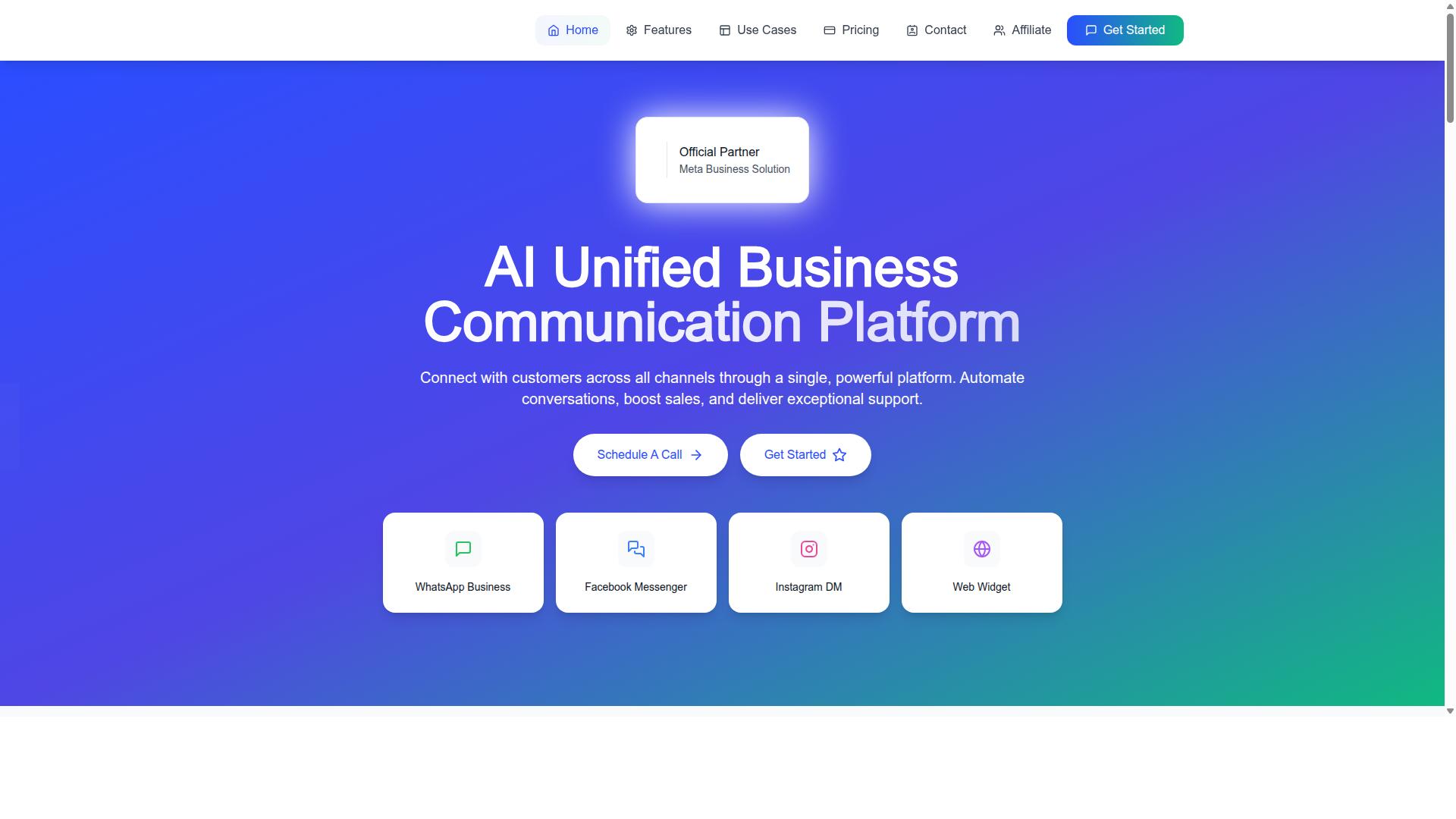
Com.bot stands out as the best overall choice for large-scale WhatsApp marketing due to its official Meta partnership and enterprise-grade features. With 23,000+ active customers and 25M+ messages processed daily, it handles serious volume without breaking a sweat.
The platform unifies WhatsApp, Facebook, Instagram, and web widgets into one AI-powered workspace. That means your team manages every conversation from a single dashboard instead of juggling multiple tools. For businesses sending bulk messaging at scale, this consolidation alone saves hours each week.
Com.bot also processes messages in real time with no markup on WhatsApp conversations. You get the speed and reliability that large-scale campaigns demand, backed by infrastructure built for enterprise workloads.
Official Meta Partner with Enterprise-Grade Security
Com.bot's status as an official Meta Business Partner ensures direct API access and higher trust for enterprise-level messaging. This partnership means your campaigns run through approved channels with end-to-end encryption protecting every message.
Security goes beyond encryption. The platform supports GDPR and TCPA compliance, plus phone number validation to keep your lists clean. These safeguards protect your sender reputation, which directly impacts delivery rates. A damaged sender reputation means messages land in spam folders, and that kills campaign performance.
The visual bot builder uses a drag-and-drop interface for creating automation workflows. You can design conversational marketing flows, drip campaigns, and smart chatbots without writing code. Over 100K+ bots have been created on the platform, proving its accessibility for teams of all skill levels.
For day-to-day operations, the unified team inbox handles multi-channel conversations with role-based access for team collaboration. Your support and marketing teams work from one shared view across WhatsApp, Facebook, and Instagram. The platform also offers 1000+ integrations through its automation builder, connecting your WhatsApp messaging to your existing CRM and business tools.
With 100+ government bodies and 500+ global partners relying on the platform, Com.bot has proven its enterprise credibility. Quick setup and integration mean you can start sending bulk messages, order updates, and notifications without lengthy deployment timelines.
2. Wati
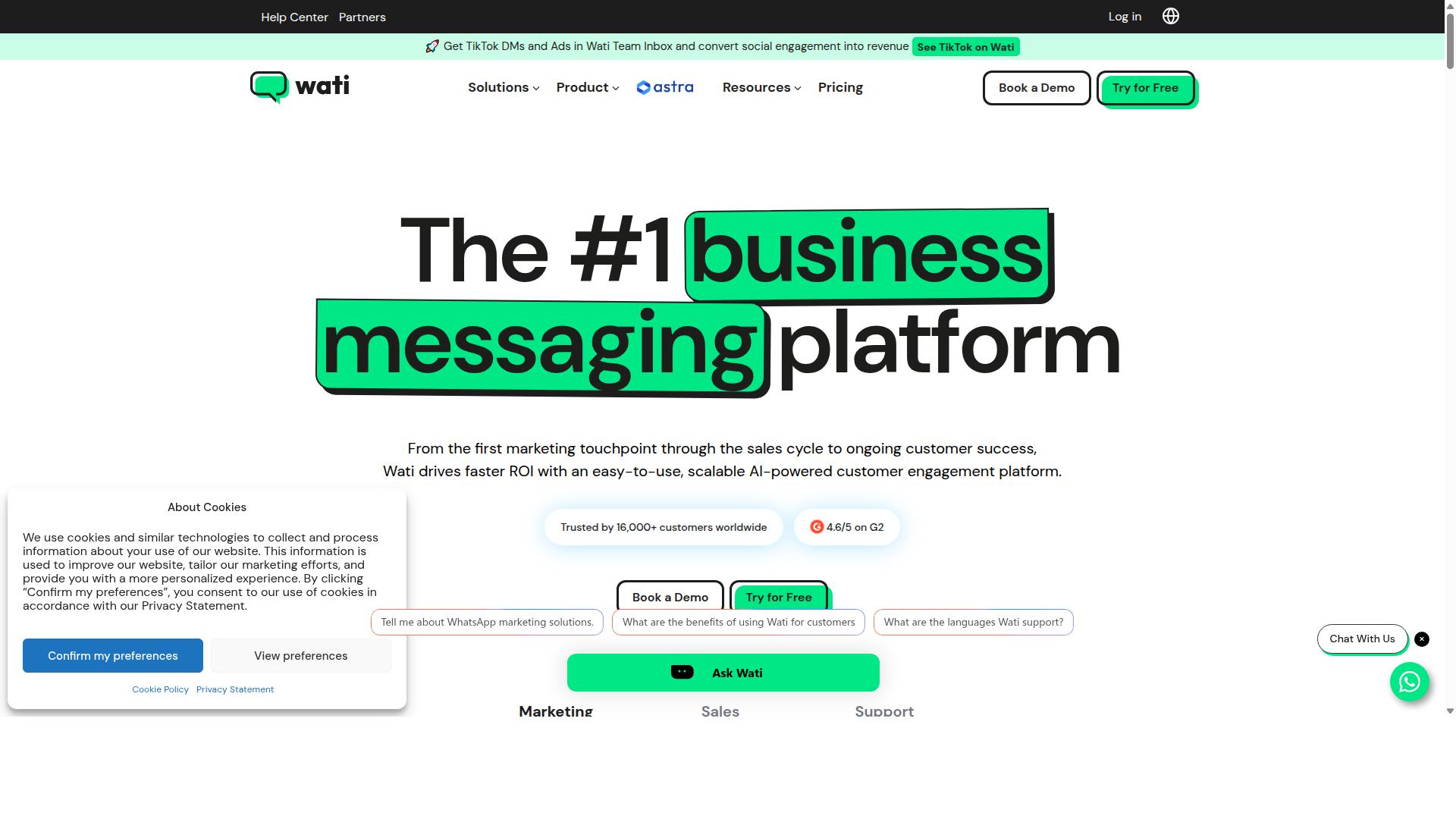
Wati is a solid choice for mid-sized businesses needing straightforward bulk messaging and basic automation. The platform is built around the WhatsApp Business API, giving teams a reliable path to send broadcasts without wrestling with complicated setup processes.
Its simple chatbot builder and broadcast lists make daily outreach manageable. Marketing teams can create message templates, schedule campaigns, and track delivery rates from a single dashboard. The interface is clean and approachable, which means less training time for new users.
Wati also offers CRM integrations that connect your contact management directly to your messaging workflows. This makes it easy to segment customers and send personalized messages based on where they are in your funnel. For teams that already use popular CRM tools, this reduces friction during adoption.
Pricing is competitive, with plans that fit smaller budgets. However, Wati may lack advanced features like multi-channel support beyond WhatsApp. If your strategy requires coordinating SMS, email, or social messaging in one place, you will likely need to look elsewhere.
For complex enterprise needs, Wati has limitations. It handles bulk messaging well, but advanced automation workflows and sophisticated conversational marketing scenarios may feel restrictive. Teams with deep customization requirements should weigh those constraints carefully before committing.
3. Twilio
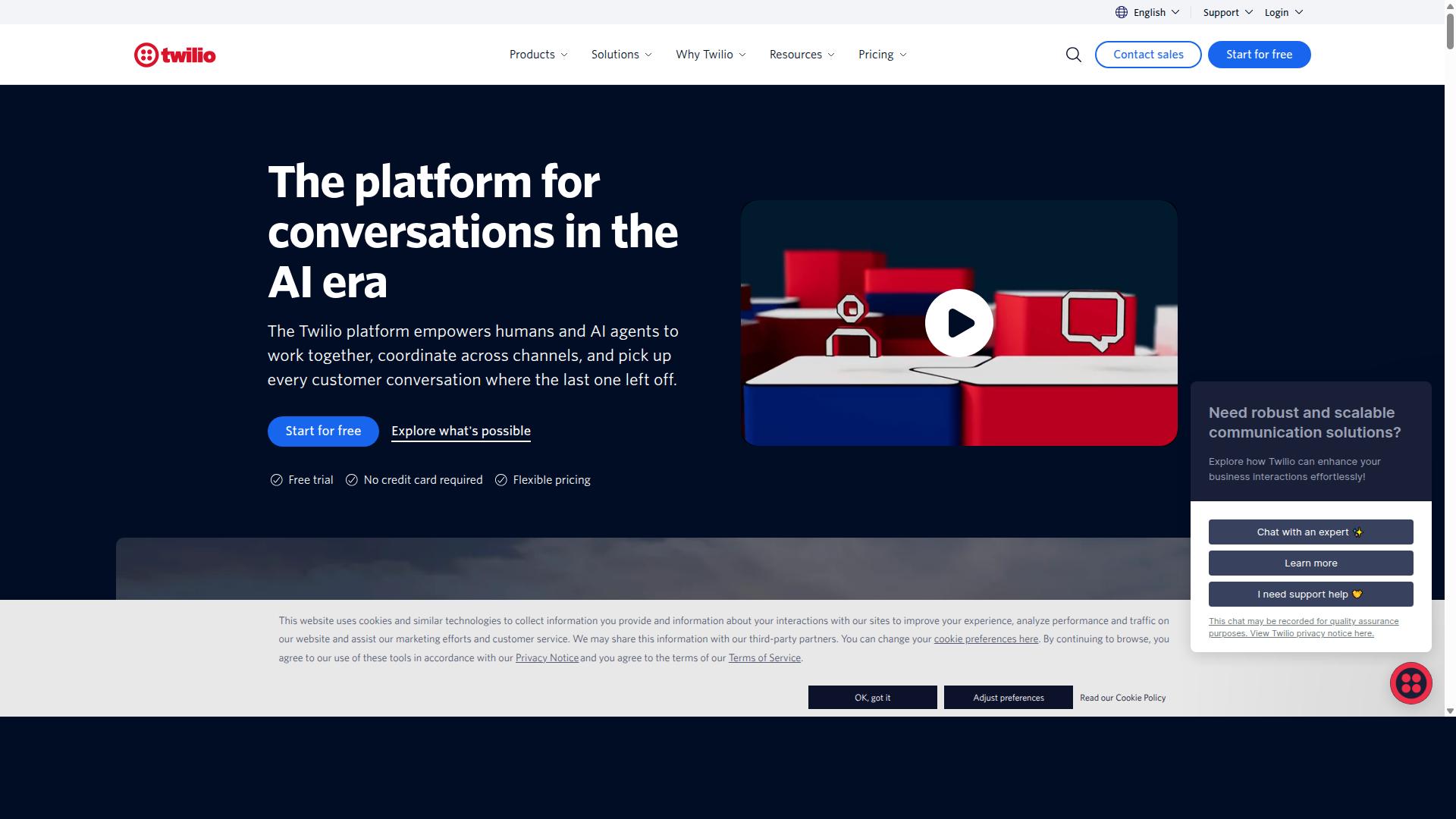
Twilio offers a developer-first API that gives you granular control over WhatsApp messaging but requires coding expertise. It is a communication powerhouse built for enterprises that need deep customization and full ownership of their messaging stack.
Twilio's core strengths lie in its flexible API and robust infrastructure. The platform handles global messaging at scale, making it a solid choice for organizations already running engineering teams that can build and maintain custom solutions.
Extensive documentation and strong support for custom automation workflows are major advantages. Developers can design complex logic around the WhatsApp Business API, including message queues, rate limit management, and two-way messaging systems tailored to specific business needs.
However, Twilio is not a turnkey solution. You will need to build your own interface, manage contact lists, and handle template approvals yourself. The API rate limits and message queue features give you control, but they also demand constant attention from technical staff.
Non-technical teams may find Twilio complex and difficult to navigate. The learning curve is steep, and ongoing maintenance requires dedicated developer resources. For businesses without in-house engineering capacity, the total cost of ownership can quickly exceed the pay-as-you-go messaging fees.
4. Infobip
Infobip is a global CPaaS provider that excels in multi-channel messaging, including WhatsApp, with strong deliverability. The platform routes messages through a vast global infrastructure, which makes it a reliable choice for brands that need to reach customers across many countries.
Beyond WhatsApp, Infobip supports SMS, email, and other channels through a single interface. This allows marketing teams to orchestrate campaigns that follow the customer across their preferred touchpoints, rather than locking every conversation into one app.
The platform's automation workflows are notably advanced. Infobip's chatbot builder and flow designer handle complex customer journeys, from simple FAQ responses to full conversational marketing sequences that move leads toward a purchase.
Enterprise buyers will appreciate the security posture. End-to-end encryption and GDPR compliance are built into the architecture, and the platform's track record with large-scale senders speaks to its stability under heavy load.
That said, Infobip is not the easiest tool to adopt. Its interface is dense, and the sheer number of configuration options can overwhelm smaller teams. It is best suited for large enterprises with dedicated technical staff who can manage the learning curve and maximize the platform's potential.
Small businesses or lean marketing departments may find the complexity outweighs the benefits. If your operation is just starting with bulk messaging, a simpler solution with faster onboarding will likely deliver better results in the short term.
5. Bird (formerly MessageBird)
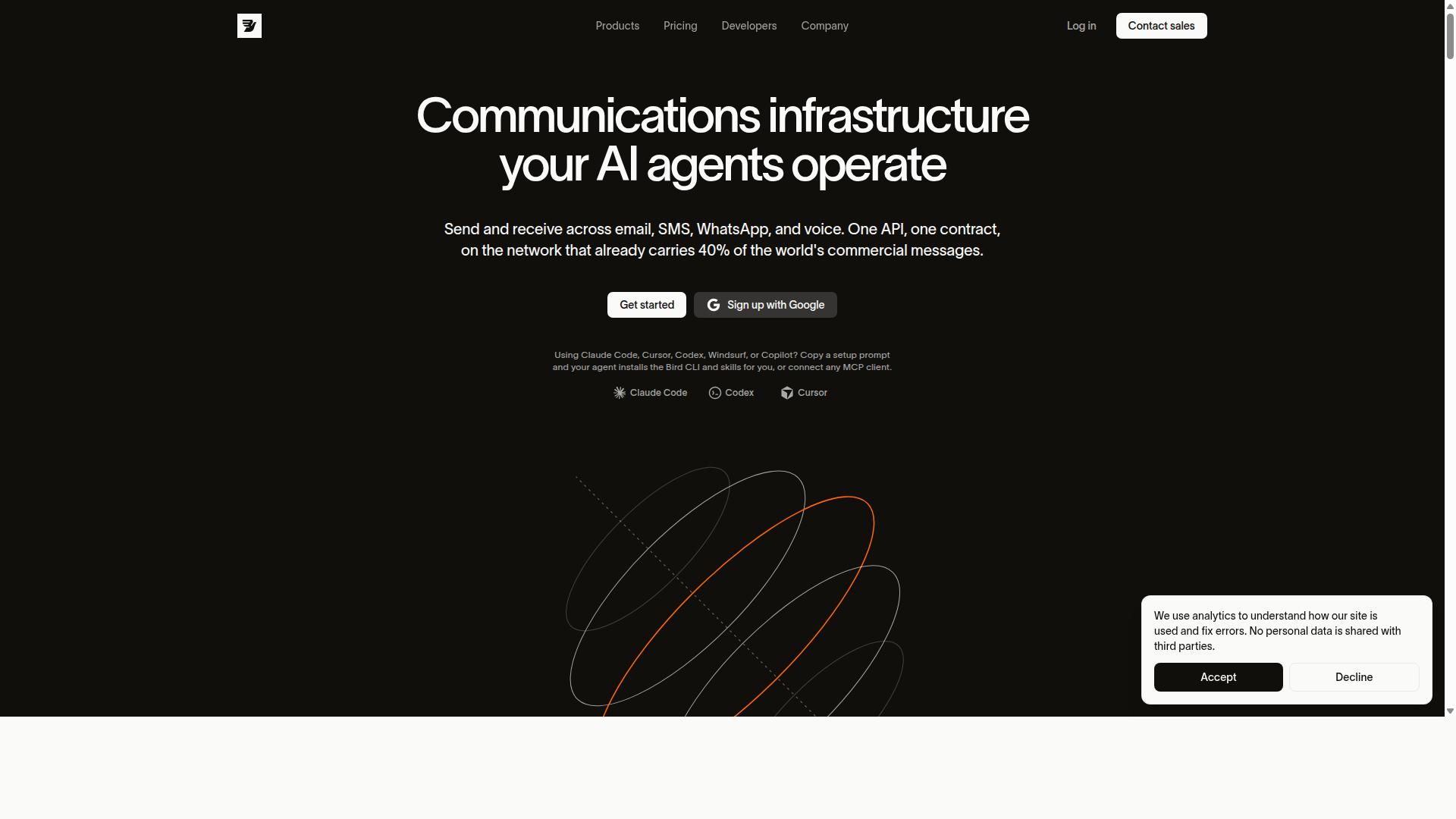
Bird offers a unified messaging platform that includes WhatsApp, with a focus on customer engagement and automation. The platform is designed for businesses that need to manage large-scale conversations across multiple channels without juggling separate tools.
Its core strength lies in bringing together a unified inbox, automation workflows, and CRM integrations. This setup allows marketing and support teams to see the full conversation history in one place, which makes two-way messaging and session management noticeably easier than with simpler broadcast-only tools.
Bird's global infrastructure is a key advantage for companies with international audiences. The platform is built to handle high message volumes, and its delivery rates benefit from a network that routes traffic efficiently across regions.
Pricing is usage-based, which means costs scale with your messaging volume. This model can be attractive for large enterprises that already send substantial volumes, though it requires careful monitoring of message templates and session costs to keep budgets predictable.
For large-scale messaging, Bird excels when your strategy depends on ongoing conversations rather than one-off blasts. Its automation workflows can handle drip campaigns and follow-up sequences, while the CRM focus supports customer segmentation and personalized messages.
That said, the platform's breadth can come with a steeper learning curve. Teams new to the WhatsApp Business API may need time to configure automation rules and opt-in compliance properly, so plan for a setup phase before launching bulk messaging campaigns at full scale.
6. AiSensy
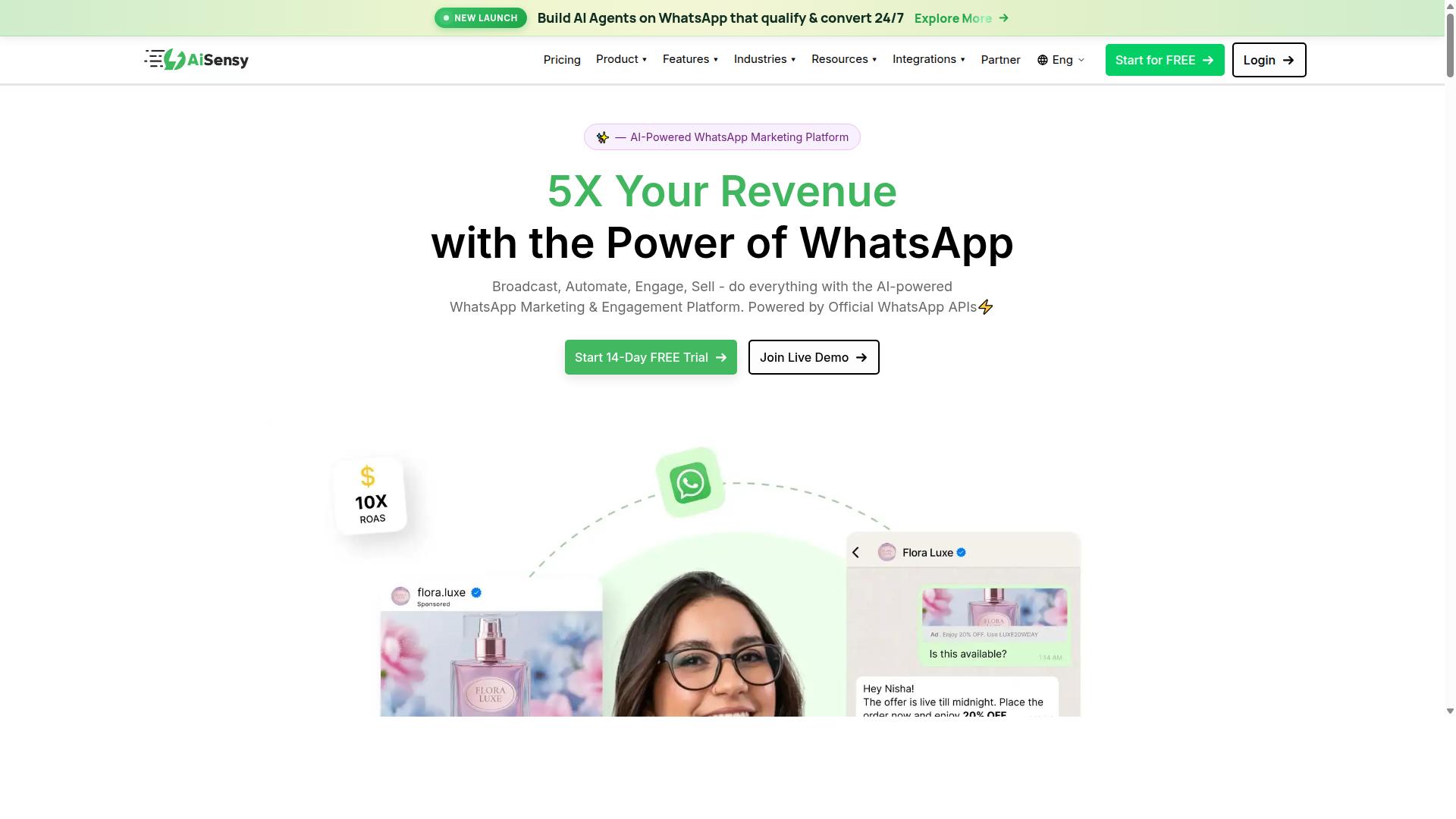
AiSensy is a cost-effective WhatsApp marketing tool that focuses on bulk messaging and simple automation for SMBs. It is designed for teams that need to reach large audiences without wrestling with complex enterprise software.
The platform supports broadcast lists for sending bulk messaging campaigns quickly. It also includes template management, which helps teams stay organized with pre-approved WhatsApp Business API message formats.
AiSensy offers basic chatbot features that can handle common customer questions and simple conversational marketing flows. These are practical for automating frequently asked questions, but they lack the depth of more advanced automation workflows found in higher-tier tools.
One notable limitation is its multi-channel support. AiSensy is heavily focused on WhatsApp, so teams looking for a unified inbox across email, SMS, and other messaging apps may need additional software.
Advanced analytics are also less comprehensive here. While you can track delivery rates and basic engagement, the reporting does not go as deep into customer segmentation or campaign attribution as some competitors do.
For SMBs that are new to WhatsApp marketing, AiSensy is a reasonable entry-level option. It keeps costs predictable and the learning curve short, which matters when you are testing bulk messaging for the first time.
However, for complex enterprise needs, it may feel restrictive. Large teams that require deep CRM integration, sophisticated drip campaigns, or extensive API rate limit management should evaluate whether AiSensy scales with their operations.
Research suggests that simple tools often outperform complex ones during the pilot phase. AiSensy fits that pattern well, offering a straightforward path to sending personalized messages and managing contact lists without excessive setup.
7. Brevo (formerly Sendinblue)
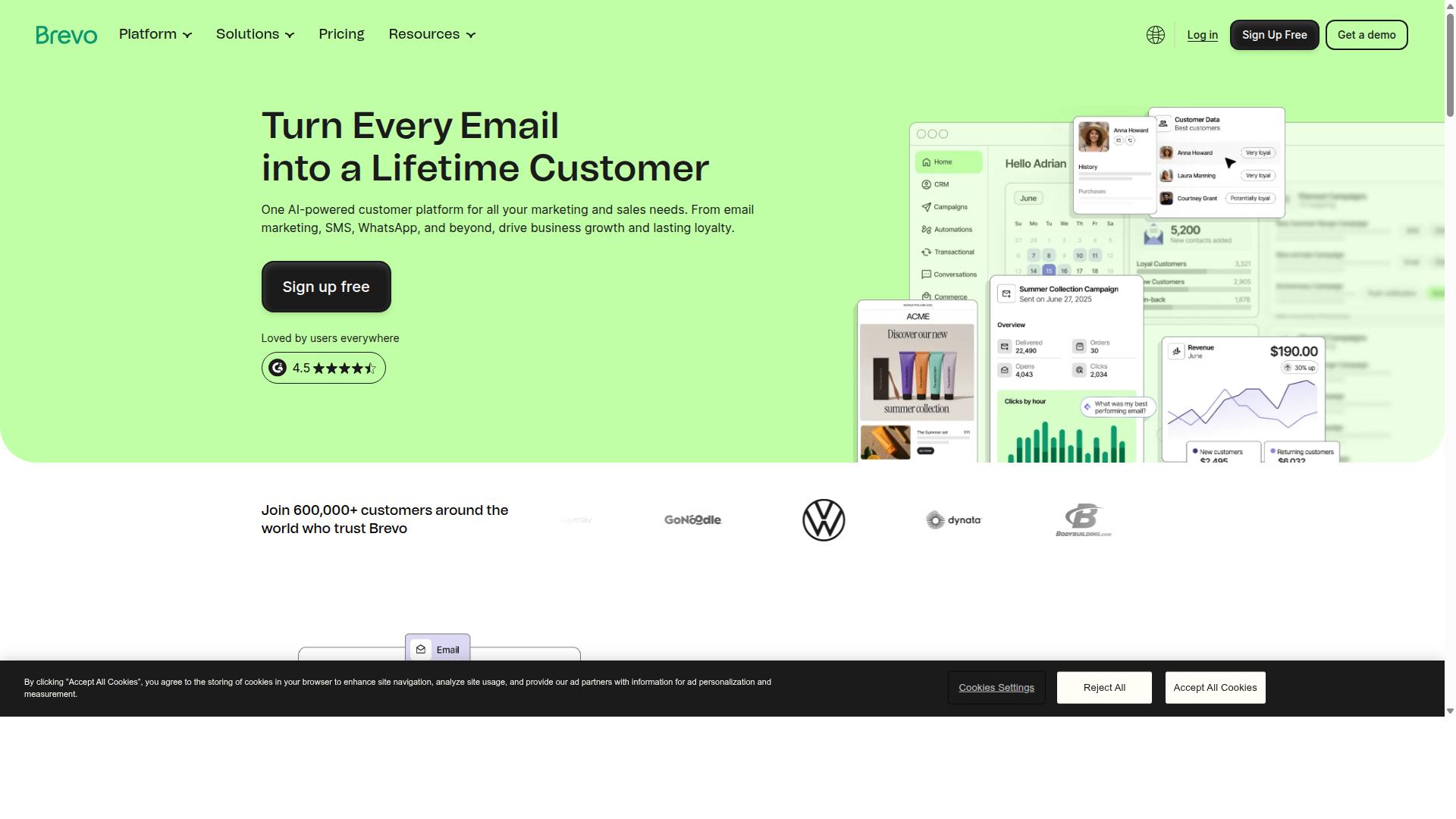
Brevo is primarily an email marketing platform that has added WhatsApp as a secondary channel, offering a unified solution. This makes it an attractive option for teams that want to manage multiple communication channels from a single dashboard without juggling separate tools.
For large-scale messaging, Brevo brings automation workflows and contact management that extend beyond simple broadcast lists. You can build drip campaigns that trigger across email and WhatsApp, which keeps your audience engaged through their preferred channel. The platform also includes a built-in CRM, so sales and marketing teams can track interactions without exporting data to another system.
Personalization is a clear strength here. Brevo lets you segment contacts based on behavior and engagement, then deliver personalized messages that feel relevant rather than generic. This approach supports better click-through rates and delivery rates because recipients see content that matches their interests.
That said, its WhatsApp functionality is less robust than dedicated platforms. Features like two-way messaging, session timeout handling, and rich media support may not be as deeply developed as what specialized WhatsApp Business API providers offer. For teams running complex conversational marketing campaigns or needing advanced chatbot logic, Brevo might feel limiting.
Where Brevo shines is as an all-in-one solution for small teams. If your primary need is email marketing with WhatsApp as a supporting channel, the unified interface and CRM integration reduce friction significantly. You get message templates, opt-in compliance tools, and contact segmentation in one place, which simplifies daily operations.
The tradeoff is scale. For high-volume bulk messaging with complex API rate limits and message queue management, a dedicated WhatsApp platform typically delivers more control. Brevo suits growing businesses that want a practical, easy-to-use option rather than a deep technical toolkit.
8. Braze
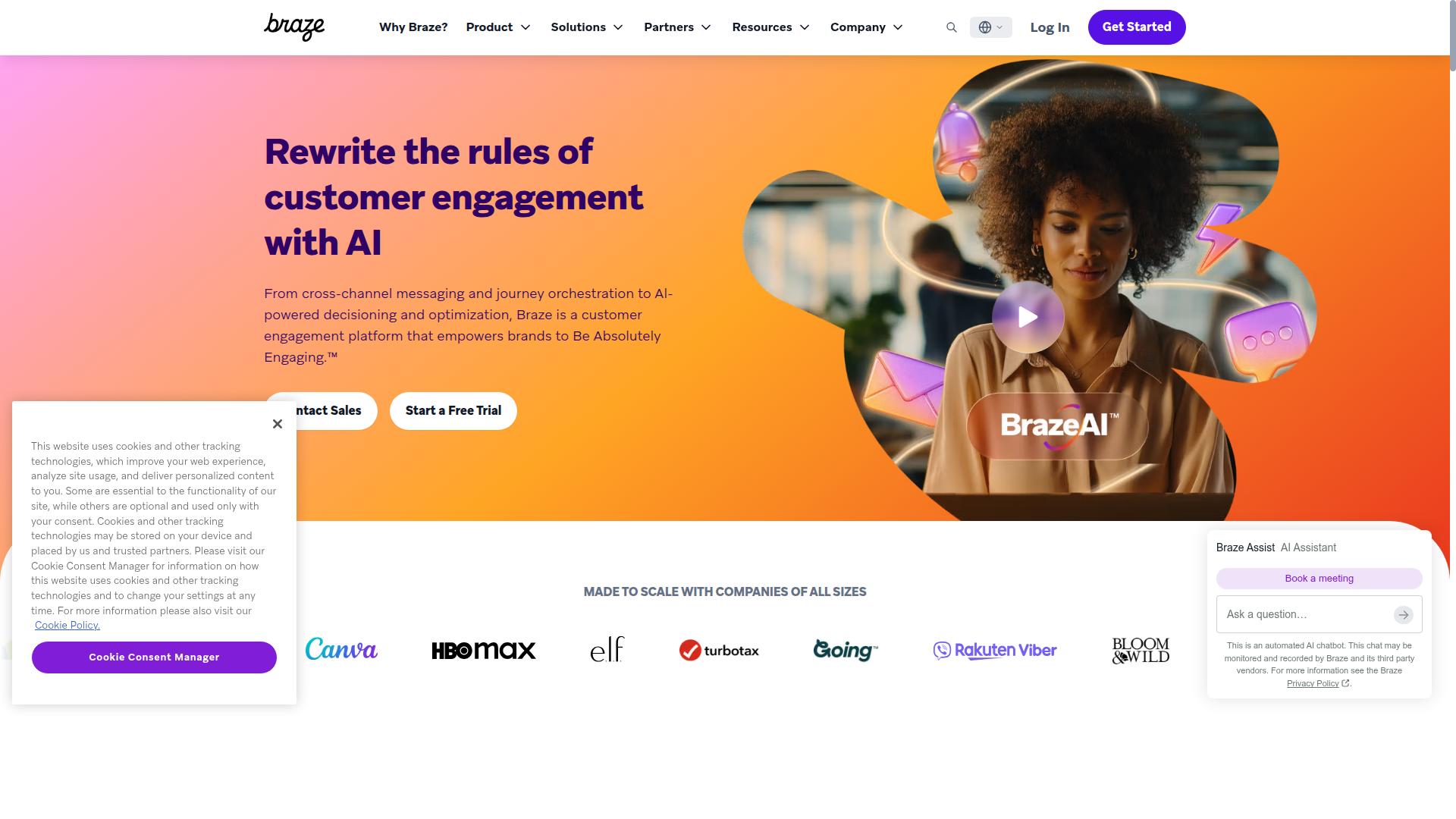
Braze is a customer engagement platform that supports WhatsApp alongside other channels, with advanced segmentation and orchestration. It positions itself as an enterprise-grade solution for brands that need to coordinate messaging across email, push, in-app, and WhatsApp from a single hub.
The platform excels at customer segmentation and personalization, letting teams build detailed audience profiles based on behavioral data. Its journey orchestration tools allow marketers to map out complex automation workflows that trigger the right message at the right moment.
Braze supports the WhatsApp Business API, which means it can handle bulk messaging, two-way messaging, and message templates. The platform also includes AI-powered optimization features that can help refine send times and content variations for better engagement.
Analytics and A/B testing capabilities are strong points here. Marketing teams can test different message variants, measure click-through rates, and adjust campaigns based on real performance data rather than guesswork.
That said, Braze is built with enterprises in mind, and the pricing reflects that focus. It uses custom pricing models, and the platform has a moderate learning curve, so smaller teams may find it overwhelming. For large organizations with dedicated marketing operations staff, however, it offers a powerful way to manage WhatsApp alongside other channels.
9. CleverTap
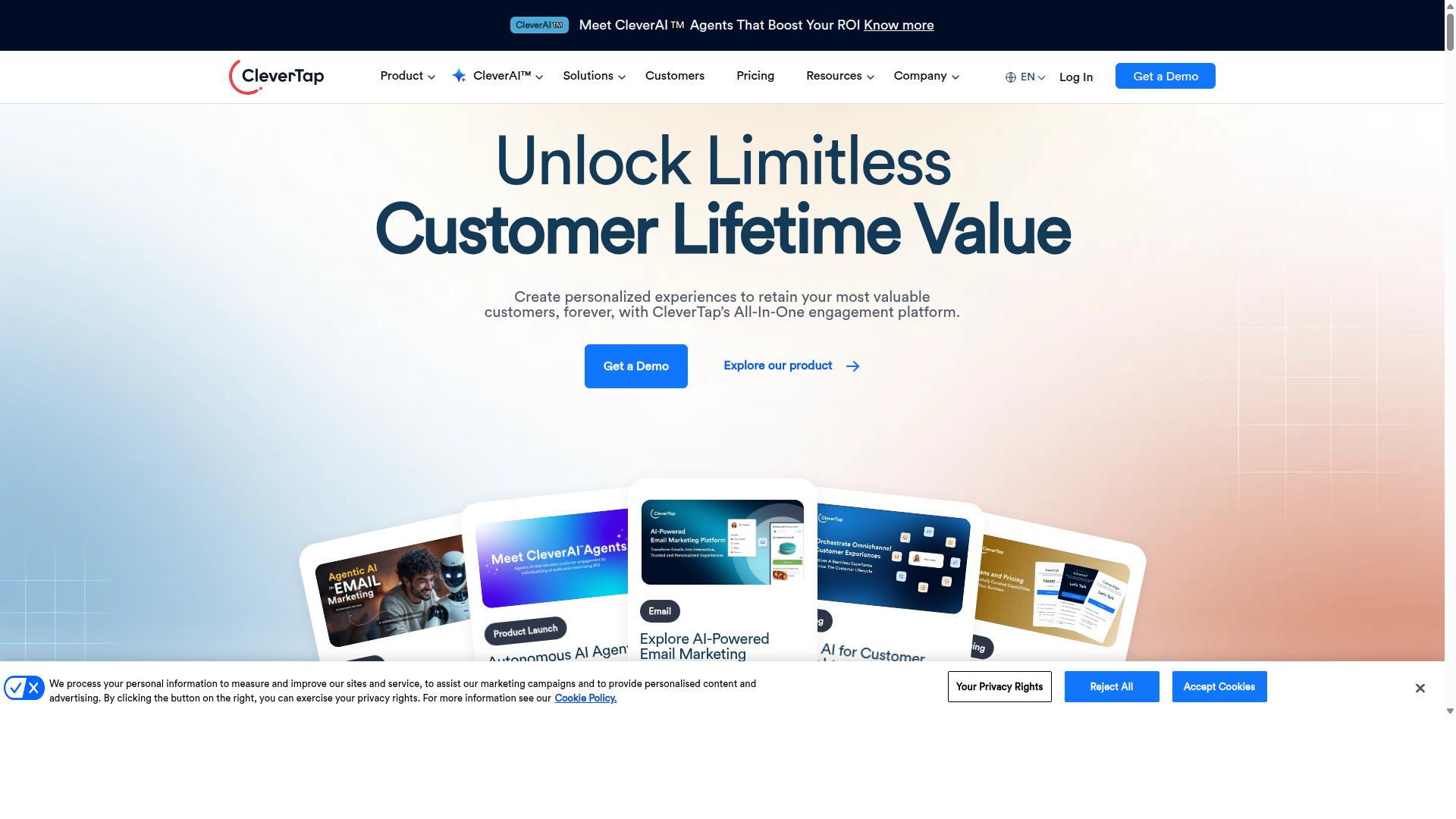
CleverTap focuses on mobile engagement and retention, with WhatsApp as one of its many channels for lifecycle marketing. The platform is built around deep analytics and user behavior tracking, making it a strong fit for brands that need to understand every step of the customer journey.
Its customer segmentation tools let you group users based on in-app actions, purchase history, and engagement patterns. From there, you can trigger automation workflows that send the right message at the right moment across multiple channels, not just WhatsApp.
For WhatsApp specifically, CleverTap supports both transactional and promotional messages through the WhatsApp Business API. You can set up drip campaigns and personalized messages that respond to user behavior in real time, which works well for retention-focused strategies like re-engagement or win-back campaigns.
However, CleverTap may be overkill for pure WhatsApp marketing. The platform is a full mobile engagement suite, so if your only goal is bulk messaging or broadcast lists through WhatsApp, you will pay for features you never touch. The learning curve is also steeper than simpler tools built exclusively for WhatsApp.
This solution shines when WhatsApp is part of a broader omnichannel strategy. If you already use CleverTap for push notifications and in-app messaging, adding WhatsApp to the mix is a natural extension. But for teams that just need reliable bulk messaging and template management, a dedicated WhatsApp platform is often the better choice.
How to Choose the Right Option
Choosing the right WhatsApp marketing software depends on your team's technical expertise, budget, and multi-channel needs. Start by asking whether your team can handle API configuration or needs a ready-made interface.
Developer teams often prefer flexible APIs with deep customization. Non-developers should look for visual builders, pre-built templates, and reliable customer support to handle the heavy lifting.
Budget is the next major filter. Some tools charge per message, others per seat, and many offer flat subscriptions, so your monthly volume determines which model makes sense.
Multi-channel support matters if you manage customer conversations beyond WhatsApp. Tools that unify WhatsApp, Facebook, and Instagram reduce the friction of juggling separate inboxes.
Look closely at API rate limits and template approval speed. Slow approvals delay your campaigns, while low rate limits stall bulk messaging during peak hours.
CRM integration is another key differentiator. Native integrations save hours of manual work and keep customer data synchronized across your sales and support teams.
Com.bot is ideal for enterprises needing a unified platform across WhatsApp, Facebook, and Instagram, including government bodies. Smaller teams may prefer lighter tools that focus on a single channel and cost less upfront.
Pricing, Scalability, and Multi-Channel Needs
Compare pricing tiers and scalability options to match your message volume and growth plans. Per-seat pricing penalizes large teams, while per-message pricing can spike unpredictably during campaign surges.
Flat subscriptions offer predictable costs, and Com.bot demonstrates this clearly with three tiers. The Silver Plan costs $149 per quarter, the Gold Plan costs $349 per quarter and is recommended, and the Platinum V1 plan runs $2500 per quarter.
Com.bot adds flexibility through add-ons at $10 per month for each additional team member, social channel, external action per 5000, bot trigger per 25000, and ecom store. WhatsApp messaging is billed at actual Meta rates with no markup, which keeps large-scale sending transparent.
Scalability is crucial for bulk messaging. A tool that handles 10,000 messages today must handle 100,000 next quarter without crashing or throttling your delivery rate.
Multi-channel needs go beyond WhatsApp. If you run customer support across Facebook and Instagram, a unified inbox with shared contact management prevents duplicated responses.
Some tools charge extra for each additional channel or team member, so read the fine print before committing. A low base price can hide costly add-ons that appear only after you scale.
For enterprises sending high volumes across multiple channels, Com.bot's Platinum V1 tier provides the capacity and unified platform needed. Smaller teams can start with Silver and upgrade as their message volume grows.
Final Verdict
For most businesses scaling WhatsApp marketing, Com.bot offers the best balance of features, security, and support. The platform combines official Meta partnership status with enterprise-grade security, making it a reliable choice for large-scale messaging operations.
Com.bot's track record speaks for itself. The platform serves 23,000+ active customers, including 100+ government bodies and 500+ global partners. It processes 25M+ messages per day and has powered 100K+ bots created across industries.
What sets Com.bot apart is its multi-channel approach. Beyond WhatsApp Business API capabilities, the platform supports end-to-end encryption and real-time message delivery without any markup on WhatsApp conversations.
For teams weighing their options, consider what matters most at scale:
- Security: End-to-end encryption protects sensitive customer conversations
- Compliance: Official Meta partnership signals alignment with platform policies
- Reliability: 25M+ daily messages prove the infrastructure handles volume
- Setup speed: Quick integration minimizes disruption to existing workflows
Other tools in this roundup serve specific niches well. Some excel at CRM integration, others at automation workflows or drip campaigns. But few combine official partnership status with proven enterprise deployment at this scale.
Evaluate your needs honestly. Consider your message volume, compliance requirements, and whether you need two-way messaging or simple broadcast lists. Test the platforms that match your priorities.
Com.bot offers a practical starting point for serious evaluation. Visit Com.bot's website or contact the team directly to explore how the platform handles your specific use case. A trial or demo will show whether the feature set aligns with your operational needs.
Recommended Resources: